Choosing the right outdoor extension cord is crucial for safety and efficiency in various tasks. According to the National Electrical Manufacturers Association, outdoor extension cords account for a significant number of electrical accidents each year. Selecting an appropriate cord can minimize these risks.
Many people overlook the importance of outdoor extension cords. They often assume that any cord will suffice for their needs. However, environmental factors such as weather conditions and the type of appliances used play a significant role in choosing the right cord. A quality outdoor extension cord should have proper insulation and be rated for outdoor use to withstand moisture and UV exposure.
In 2026, it's essential to consider cord length, gauge, and power capacity. The wrong choice can lead to overheating or electrical faults. With outdoor projects on the rise, understanding these factors is more important than ever. Consumers must reflect on their choices to ensure safety and functionality in their outdoor activities.
Outdoor extension cords play a crucial role in modern outdoor activities. As more people engage in gardening, landscaping, or outdoor entertainment, the need for safe and reliable power sources grows. According to a 2025 safety report, improper use of cords leads to over 4,000 electrical accidents annually. This highlights the importance of choosing the right extension cord for outdoor use.
In 2026, consumers should consider essential factors such as cord thickness and length. A thicker gauge allows for higher wattage, which is important for tools like lawn mowers or electric grills. Many users overlook these specifications, risking electrical failures or fires. The National Electrical Manufacturers Association reports that nearly 30% of outdoor extension cords fail to comply with safety standards. Awareness and understanding of these requirements can prevent incidents and ensure a safer environment.
Weather resistance is another vital aspect. Cords designed for outdoor use must withstand moisture and UV exposure. A study by the Outdoor Power Equipment Institute shows that cords that aren't rated for outdoor conditions deteriorate quickly, leading to hazardous situations. Many consumers may not recognize this, ending up with cords that compromise safety and durability. Little changes like checking ratings can make a significant difference in ensuring outdoor safety.
When choosing an outdoor extension cord, understanding key features is crucial. Durability is a top consideration. Look for cords with robust, weather-resistant materials. These materials will withstand sun, rain, and extreme temperatures. Heavy-duty sheathing can provide extra protection against wear and tear.
Cord length is another important feature. The right length ensures you can reach all necessary outdoor areas without straining. Measure the distance to your power source. Too short? You may need to buy another. Too long? It can create a trip hazard.
Gauge size plays a significant role in performance. A lower gauge number means a thicker wire. Thicker wires can handle more power. For most outdoor devices, a gauge between 12 and 14 works well. Keep in mind that a thicker cord is often more rigid. It can be cumbersome to manage.
Lastly, ensure the cord has outlets that meet your needs. Weatherproof covers can also be a smart addition. They help protect connections from moisture. Always remember to choose a cord rated for outdoor use, as indoor cords may not offer the same level of safety or durability.
This chart displays the key features to consider when selecting the best outdoor extension cord for your needs in 2026, based on different characteristics.
When choosing an outdoor extension cord, gauge and length are critical factors. The gauge determines the cord's ability to carry electrical current. Thicker wires, or lower gauge numbers, are better for high-powered tools. A 12-gauge cord is ideal for heavy equipment. A 14-gauge might suffice for smaller devices.
Length is equally important. The longer the cord, the more voltage drop may occur. For running tools away from power sources, consider how far you'll need to go. If the cord is too long, it can lead to performance issues. Measure the distance before purchasing. Think about your yard layout and access points.
Sometimes, people overlook these details in their haste. Choosing the wrong gauge or too long a cord can cause frustrating situations. It’s essential to reflect on these choices. Are you getting the best performance for your devices? Evaluating these factors can save time and money in the long run.
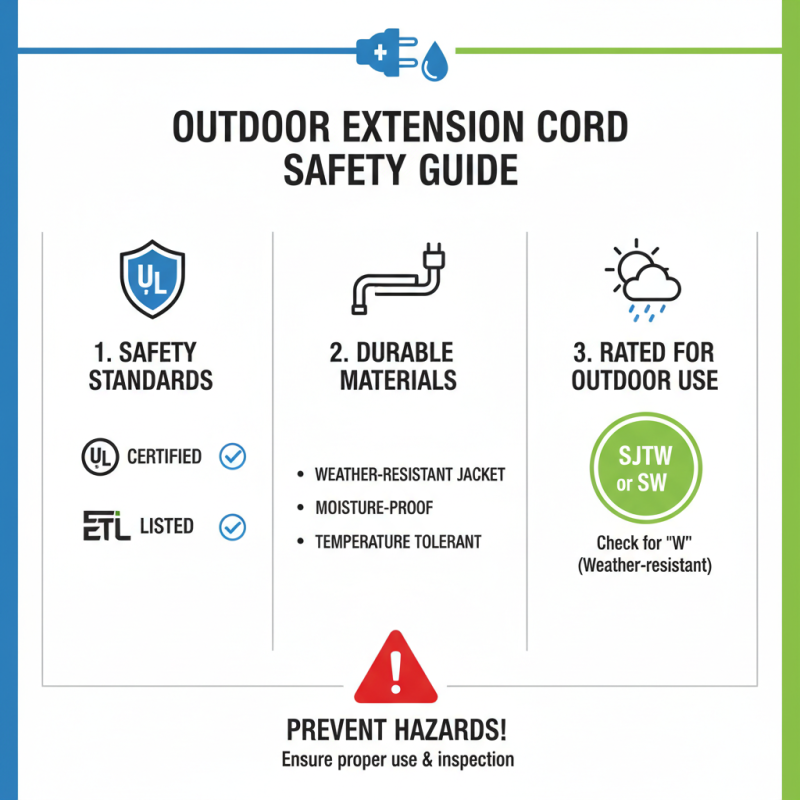
When choosing an outdoor extension cord, safety standards and certifications are crucial. Look for cords rated for outdoor use, with durable materials that resist moisture and temperature extremes. UL or ETL markings indicate compliance with safety testing. These certifications ensure the cord can withstand various outdoor conditions without becoming a hazard.
Waterproof designs are particularly important. Look for cords with integrated seals to prevent moisture from damaging the wiring. Cords should also have reinforced plugs to reduce wear and tear. Using a non-certified cord can lead to overheating or electrical shock. Pay attention to the gauge of the cord, as a thicker gauge allows for higher power loads safely.
Not all outdoor cords are created equal. Some may advertise durability but lack essential safety features. Always examine the specifications closely. A more expensive option might be worth it for the peace of mind. Misjudging your needs can lead to frustrating or dangerous situations. Think critically about where and how you'll use the cord, and don't settle for options that seem "good enough.
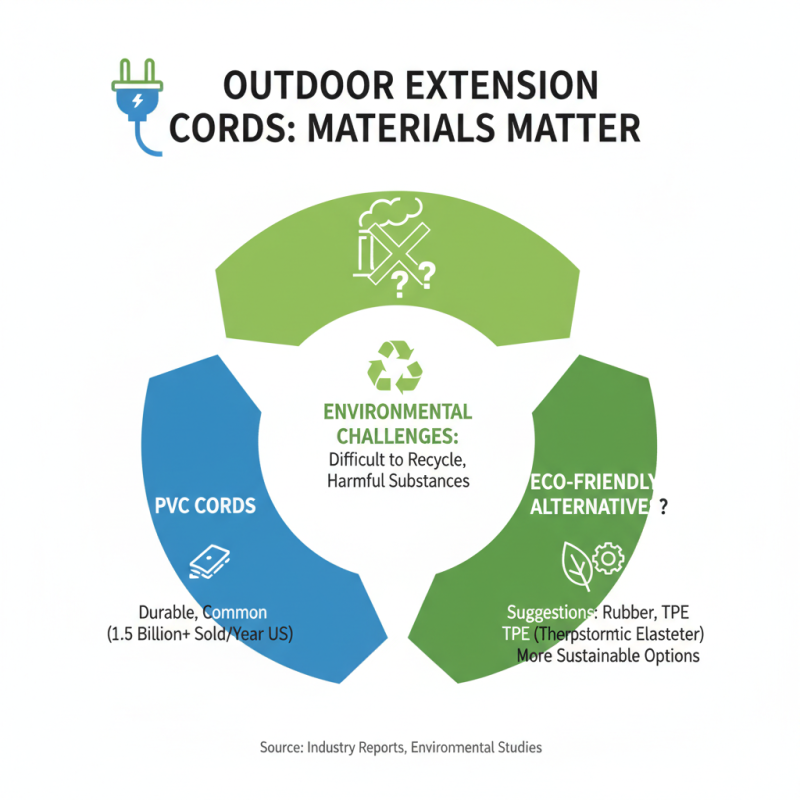
When choosing an outdoor extension cord, materials matter. Over 1.5 billion extension cords are sold yearly in the U.S. alone. Many are made with PVC, a material known for its durability, but it poses environmental challenges. PVC is difficult to recycle and can release harmful substances when incinerated.
Moving towards eco-friendly options is crucial. Cords made from thermoplastic elastomer (TPE) are gaining popularity. TPE is more flexible and environmentally friendly, often able to withstand extreme temperatures. Reports suggest that TPE cords have a lower environmental impact, with 30% less energy used in production compared to traditional materials.
Choosing sustainable materials helps reduce waste. However, not all eco-friendly cords perform well under severe weather conditions. Some may lack the robustness required for prolonged outdoor use. It’s essential to balance durability and environmental responsibility. Research indicates that cords designed for longevity further minimize waste over time. Always consider certifications indicating sustainable manufacturing practices. These choices shape not just our immediate environment but the planet’s future as well.